
SEO & Marketing
The Risks of Dropshipping and How to Start as a Beginner
Dropshipping risks are real: faulty products, stockouts, hard returns, price wars, banned accounts. Start in the right order and lose less while you learn.


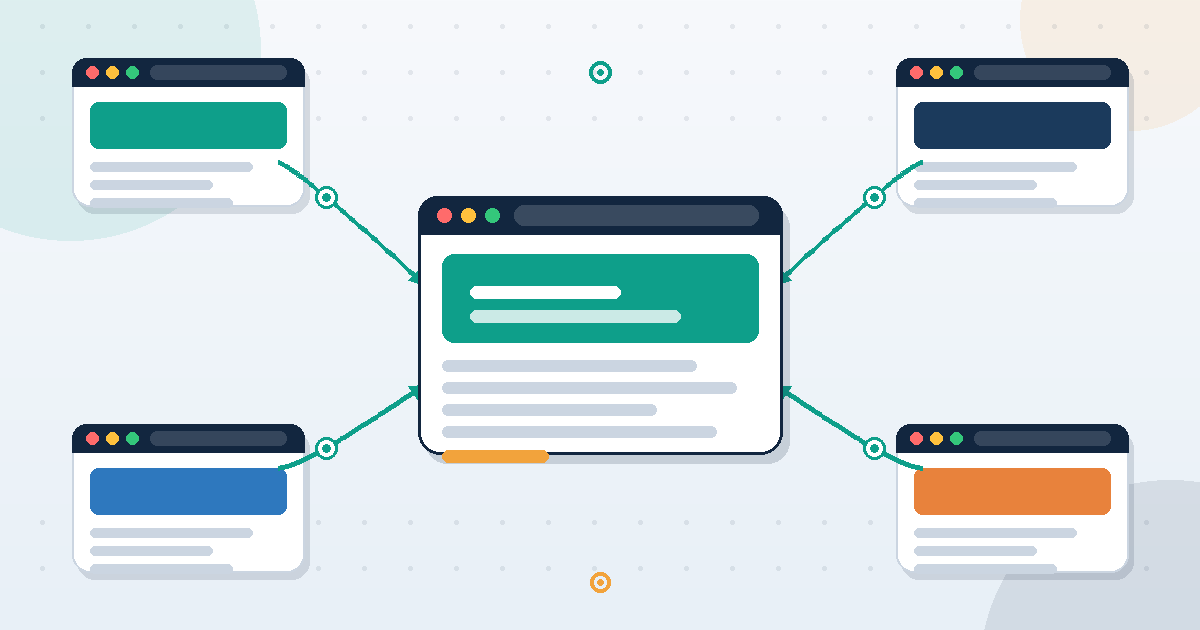
A backlink is a link from another website pointing to your website. Google treats each backlink like a recommendation: if a reputable, topically relevant page links to you, that is a signal that your content is worth referencing.
But not all backlinks are equal. A good backlink can help Google discover a new page faster, bring referral traffic, and strengthen trust in the page it points to. A backlink bought in bulk, placed in the wrong spot, or on an irrelevant topic is usually ignored by Google, does not help rankings, and, when the manipulation is clear, can create risk.
This guide explains backlinks from the beginning, distinguishes the types of links, and shows how to earn quality backlinks safely, with concrete examples for service websites such as web design, WordPress, or freelancing.
Put simply: you have website A. An article on website B places a link leading to a page on website A. Seen from website A’s side, that link is a backlink.
A concrete example:
A programming blog publishes an article called “Deploy your first website to a VPS”. In the article there is a sentence: “If a container will not start, check this list of common Docker commands and frequent errors to find the cause.” When readers click the words “common Docker commands and frequent errors”, they arrive at the reference page on gnurt.website. That is a backlink for gnurt.website.
Technically, a backlink is usually an <a> tag in HTML:
<a href="https://gnurtlab.com/en/common-docker-commands-and-frequent-errors/">
    common Docker commands and frequent errors
</a>
In that example:
https://gnurtlab.com/en/common-docker-commands-and-frequent-errors/ is the destination page.https://gnurtlab.com/, but a text link inside the body of an article is usually the clearest for both readers and Google.One point to remember: a backlink is different from an internal link. An internal link goes from one page to another within the same website. A backlink comes from a different website. Both matter, but this article focuses only on backlinks.
Yes, but not in the “the more, the better” way that was common many years ago.
Google has said clearly that people tend to overestimate the importance of links, and that links have not been among the top 3 ranking factors for a long time. That does not mean backlinks are useless. It means content, and how well it matches what the searcher wants, matter more, and backlinks only help when the content is already good.
In practice today:
In other words: treat a backlink as a bonus on top of good content, not as a replacement for good content.
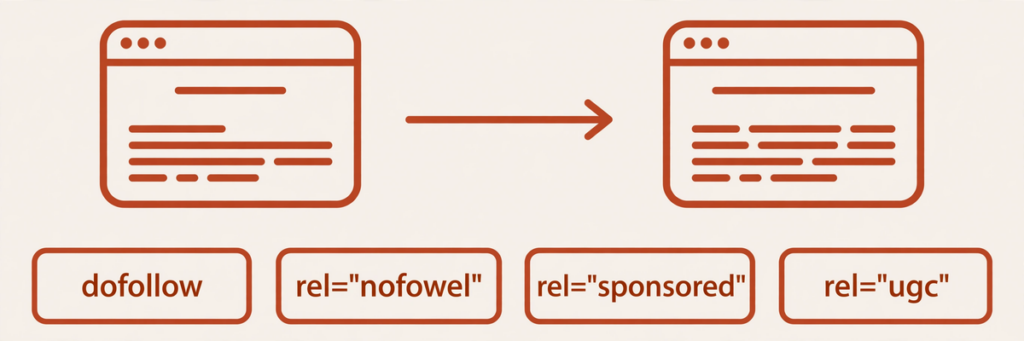
You do not need to memorise every term. Just remember the four link attributes below, because they decide whether a link can pass ranking signals, and how Google understands the purpose of the link.
| Type | How to recognise it | What it means in practice |
|---|---|---|
| Dofollow (default) | A normal <a> tag, with no special rel attribute | The link may pass ranking signals. This is the kind of backlink SEOs usually want to earn naturally, through good content. |
| Nofollow | rel="nofollow" | It tells Google not to pass ranking signals. It can still bring traffic and brand signals. |
| Sponsored | rel="sponsored" | Used for advertising, sponsorship, or paid links. It is required when money, goods, or services were exchanged to get the link. |
| UGC (user-generated content) | rel="ugc" | Used for user-generated links, for example comments and forum posts. |
Examples:
<!-- Dofollow, a normal editorial link -->
<a
    href="https://gnurtlab.com/en/what-is-docker/">
    What is Docker
</a>

<!-- A sponsored link, which must carry sponsored -->
<a rel="sponsored" href="https://example.com/service">web design service</a>

<!-- A link in a comment, in UGC form -->
<a rel="ugc" href="https://example.com/article">referenced article</a>
Beyond attributes, links can also be grouped by origin:
sponsored/nofollow and its purpose is to improve rankings, Google may treat it as link spam.Before you ask for, or buy, any link, score it against these five criteria. A good backlink usually meets at least four of the five.
A link from a page in the same field, or a closely related field, is always stronger than a link from an unrelated page, even if that other page gets a lot of traffic.
Good example: a blog about WordPress, WooCommerce, or marketing for small businesses linking to an article about WooCommerce speed.
Poor example: a fashion, gaming, or gambling site linking to an article about WordPress maintenance. Readers cannot see why the link is there, and neither can Google.
Check whether the page publishes new articles regularly, gets organic traffic, and has comments or shares. A page full of thin articles, published in bulk just to place links, with almost no real readers, gives a backlink with almost no value.
Do not judge by a single number such as DA (Domain Authority, from Moz) or DR (Domain Rating, from Ahrefs). That is an estimate from a third-party tool, not a Google score.
A link placed in a paragraph that is explaining an idea, right where readers need a further reference, is the most valuable. A link in the footer, sidebar, or in a “partners” block repeated on every page is much weaker.
Good example: in an article about website speed, the section about image compression links to a guide on optimising WebP images.
Poor example: a link reading “cheap web design” stuffed into the footer of a homeware store page.
Anchor text is the clickable wording of a link. Natural means varied: some brand names, some bare URLs, some generic phrases such as “see this guide”, and only occasionally a phrase containing the exact keyword.
Natural examples for the same Docker reference page:
Unnatural example: 20 different websites all using exactly the same anchor, “cheap web design service in Hanoi”, to link to the same page. A pattern repeated word for word like that is very easy for Google to read as manipulation.
A backlink only has value while it still exists and the destination page still works. So do not change URLs casually once other sites link to them, and if you must change one, set up a 301 redirect from the old URL to the new one.
Below are six methods suited to service websites, freelancers, and small businesses. None of them produces results overnight, but all of them are durable and do not violate Google’s spam policies if done properly.
This is the foundation. People only link to content that helps them explain something better, or that has data, a checklist, or examples they do not want to rewrite themselves.
An example for gnurt.website: instead of a generic article called “What is WordPress?”, create an article with a clear citation value, such as “Monthly WordPress Maintenance Checklist for Small Businesses”, with a table of tasks, how often to do them, and signs that it is time to call for help. Another blog writing about running a website then has a reason to link to that checklist instead of writing its own version.
Content worth linking to usually takes one of these forms: a step-by-step guide with real screenshots, a comparison table, real measured data, a printable checklist, or an answer to one very specific question.
Guest posting means writing an article for another website in the same field, with a backlink to your website in the article (or in the author bio).
How to do it properly:
An example topic to pitch to a marketing blog: “Where should a small shop owner start with SEO on no budget?” In the article, the section explaining how SEO and GEO differ could link to the article What Is SEO? What Is GEO? on gnurt.website.
What not to do: send the same article to 20 websites, stuff in five links with anchors containing the exact keyword you want to rank for, and publish thin, mass-produced AI content. Google has stepped up its handling of guest-post networks that create thin content only to place paid links.
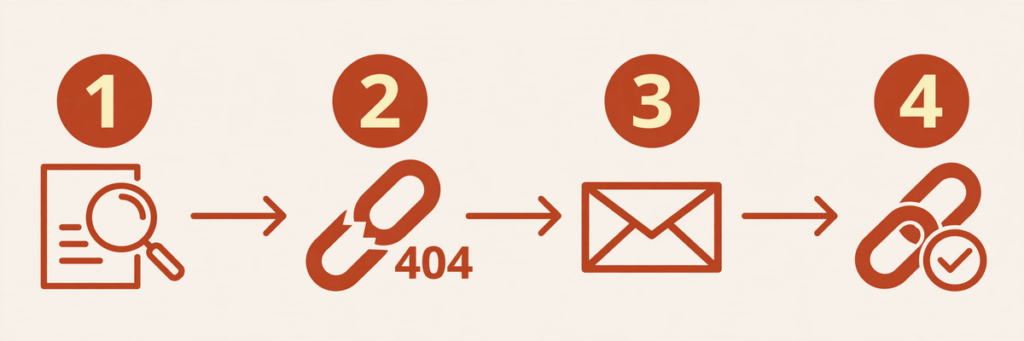
Many older articles contain links to pages that have been deleted, moved, or no longer exist. You can suggest replacing a broken link with your equivalent article.
How to do it:
Example email:
Hi, I was reading your article [article title] and noticed the link in [section name] now returns a 404. We have an article [your article title] covering the same topic, with an updated checklist. If you think it fits, you might consider replacing the old link with this one. Thank you for a very useful article!
The key point: you are helping them fix a real error, not just asking for a link for nothing.
Journalists, bloggers, and content creators often need an expert quote to cite. If you reply quickly, on topic, with data or a real example, you may be quoted with a link to your website.
Example: a journalist asks, “What is the most common mistake small businesses make when running a WordPress website themselves?” A good answer is not “Hire us”, but a concrete story: “Clients often forget to update plugins for six months, and when something breaks they do not know where their most recent backup is. Our checklist always starts by checking the backup before updating.”
You can also create “news” worth citing yourself: publish real measured results (for example: after compressing images and enabling caching, a sample page’s load time fell from 3.2 seconds to 1.1 seconds), or summarise a small survey of your own clients. Real data, even small-scale data, is easier to cite than generic opinions.
This is the most overlooked source of backlinks, because it needs no “technique” at all.
Examples:
rel="sponsored" or rel="nofollow", as the rules require.The general rule: the link must come from a real relationship, and the person placing it must voluntarily credit you. Do not create a batch of fake “partner” pages just to exchange links back and forth.
Some business directories and lists of tools/services are still valuable, especially when they have human editors and are specific to your industry.
Examples: a business profile on a reputable B2B platform, a curated list of WordPress agencies, or a resource page run by a professional community.
By contrast, avoid: submitting the same business description to hundreds of low-quality directories, automatically generated directory farms, or directories that require reciprocal links. Those links carry almost no value, and they dilute your link profile.
Suppose you have just published “Monthly WordPress Maintenance Checklist for Small Businesses”. Here is how to build backlinks for that one article over four weeks, without a large budget.
Week 1 — Finish the destination page: Check the article again: a clear title, a table of contents, a checklist that can be applied straight away, illustrative images, internal links to related articles such as the PHP2Shell vulnerability and the WordPress 7.1.4 security patch. Make sure the page loads quickly on mobile, because people who arrive through a link usually open it on a phone.
Week 2 — Guest posts and broken links: Send three guest-post pitches to three different blogs, each with a different angle, none repeating the others. At the same time, check five older WordPress articles to find broken links that this checklist could replace.
Week 3 — Purposeful sharing: Share the article in two or three genuinely relevant communities, with a short summary of its value, not just a bare link. For example: “I put together a checklist of 12 things to check every month for WordPress, including backups and safe updates. Anyone who manages their own website can use it straight away.” Reply to comments during that week; do not post and disappear.
Week 4 — Track and record: In Google Search Console, open the Links report to see which pages have linked to you, and what anchor text they used. Record it in a simple table: date discovered, linking website, URL of the linking page, anchor text, link type (dofollow/nofollow). This table helps you see which methods work so you can repeat them, and spot strange or spammy links early if any appear.
A realistic expected result: not “number 1 in four weeks”, but two to four quality backlinks to start with, a page that is indexed and beginning to get referral traffic, and a repeatable process for the next article.
| Mistake | Why it is risky | What to do instead |
|---|---|---|
| Buying a “500 cheap backlinks” package | Links from a network of low-quality, irrelevant sites, easily ignored by Google or read as manipulation | Buy 0 dofollow links for ranking. If you need advertising, use sponsored/nofollow links and measure traffic, not rankings |
| Using a private blog network (PBN) to link to itself | The sites share ownership traces, thin content, and exist only to place links — Google handles the whole network, not just one link | Invest in 1 genuinely good website, instead of 10 thin ones |
| Repeating exactly the same keyword anchor everywhere | An unnatural anchor pattern, as if deliberately manipulating rankings | Vary anchors: brand names, URLs, generic phrases, and only occasionally a keyword |
| Excessive link exchange: “you link me, I’ll link you” | Large-scale, irrelevant reciprocal exchange, just to get links back and forth, is classed as link spam | Link only to pages genuinely useful to your readers, whether or not the other side links back |
| Stuffing links into footers, widgets, and bulk comments | Links with no context, repeated across many pages, easily read as spam | Place links in the content, where readers need a further reference |
| Hiding links: text the same colour as the background, hidden links | It deceives users and search engines, with a risk of manual action | Every link must be visible and have a clear reason to exist |
A note on the Disavow tool: Google says clearly that this tool is not for most websites. Only consider it if you receive a manual action notice for unnatural links, or you have a large number of clearly artificial links and have already tried to have them removed without success. Do not disavow links in bulk just because a tool gave them a low score.
Do not judge backlinks by a single number. Track these four groups of metrics, at least once a month:
In Google Search Console, the Links report shows which pages are linked to most, which websites link to you most, and the most common anchor text. That is the most reliable free data to start with, before you add any paid tool.
Are nofollow backlinks useless?
No. Nofollow does not pass ranking signals by default, but it still brings traffic, helps readers discover your brand, and makes your link profile look more natural. A profile with only dofollow links is the abnormal one.
How long does it take for a backlink to have an effect?
Usually 2 to 8 weeks for Google to discover, record, and reflect it in rankings, depending on the quality of the link and how often Google crawls the linking page. Do not judge a campaign after just a few days.
Should a new website build backlinks straight away?
Start with content and internal links first. Once you have 5–10 genuinely good articles, begin earning backlinks slowly. A new website suddenly gaining hundreds of links in a week looks very unnatural.
Should you hire a backlink service?
Only hire one that is transparent: it shows you the websites where links will be placed in advance, explains its editorial process, makes no specific ranking promises, and does not use PBNs or disguised paid dofollow links. If it refuses to show you the site list because it is “secret”, treat that as a warning sign.
Backlinks are still part of SEO, but their role has changed: from “the more, the better” to “the more accurate and genuine, the better”. A quality backlink is a link from a topically relevant page, with real readers, placed in the content in the right context, with natural anchor text, pointing to a page that deserves to be recommended.
If you remember only one thing from this article, remember this: make content good enough that other people want to cite it, then actively bring that content to the right people, in the right places. That is the most durable way to build backlinks, and the least risky way in the face of Google updates.
Do you need a fast WordPress website that is easy to maintain and easy to optimise for SEO from the start? Take a look at Gnurt’s website design and optimisation services, or send a request for advice tailored to your needs.
Full-stack developer

Dropshipping risks are real: faulty products, stockouts, hard returns, price wars, banned accounts. Start in the right order and lose less while you learn.

You’ve probably scrolled past a video like this: “sell online with no capital, no warehouse, a few thousand dollars a month.” The person in the video opens a store, lists a few products from a supplier, runs some ads, and orders keep coming in while they never touch a single item. It sounds great. But when...
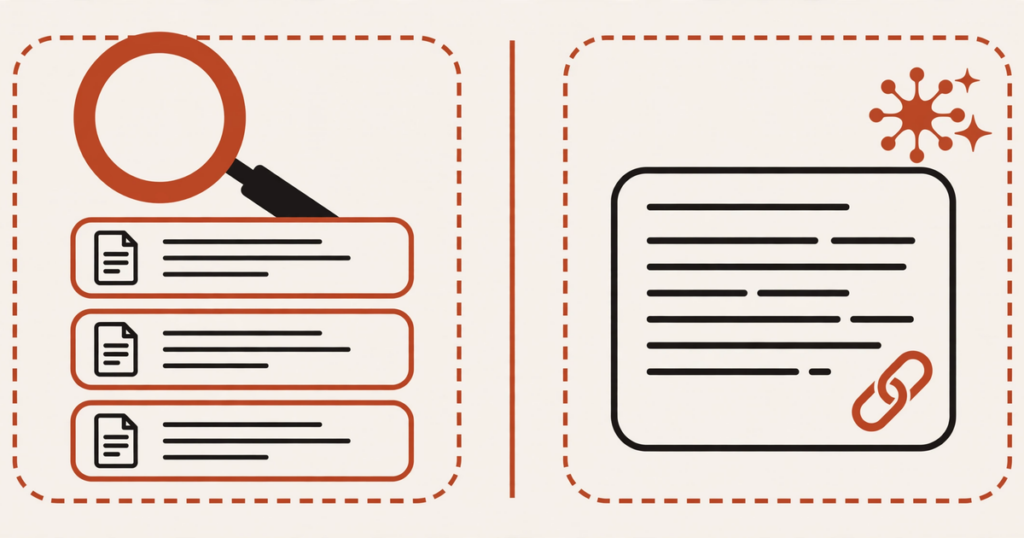
If you are wondering what is SEO and GEO, here is the simplest explanation: SEO is how you optimise a website so it appears high in search results pages such as Google. GEO is how you optimise content so AI systems such as AI Overviews, ChatGPT or Perplexity choose it as a cited source when answering...
Comments
You can use your Google account to comment. Google only shares your verified name and email address to display your name. You can log out at any time.
Sign in with GoogleNo comments yet. Be the first!